

We know that Website Migration SEO operates as a technical procedure but presents businesses with a dangerous choice that impacts their expansion. Organizations experience ranking declines when they migrate their online assets because of inadequate preparation and nonfunctional website redirection systems and insufficient search engine optimization strategies.
The team began implementing technical SEO migration from the initial planning stage of the project. The team used data and audits and real-time monitoring for all their work activities. The organization used a data-driven strategy to manage risks and maintain search visibility during the migration process. The team developed the Website Migration SEO process through careful design which matched current search engine algorithms. The development team and SEO team worked together effectively which resulted in a successful and organized website migration process.
Understanding Website Migration SEO
Website migration describes the process of changing a website’s domain system and content management system and fundamental structural elements which results in alterations to its search engine visibility. Even simple errors can lead to search engine ranking decreases and problems with website indexing.
The inadequate execution of Website Migration SEO results in these three main consequences for search engine optimization.
- Organic traffic
- Keyword rankings
- Internal links
- Domain authority
Search engines depend on signals that include redirects and URL structure and internal links. The system experiences fast visibility loss when these connections stop working.
Why Website Migration SEO Needs Strategic Planning?
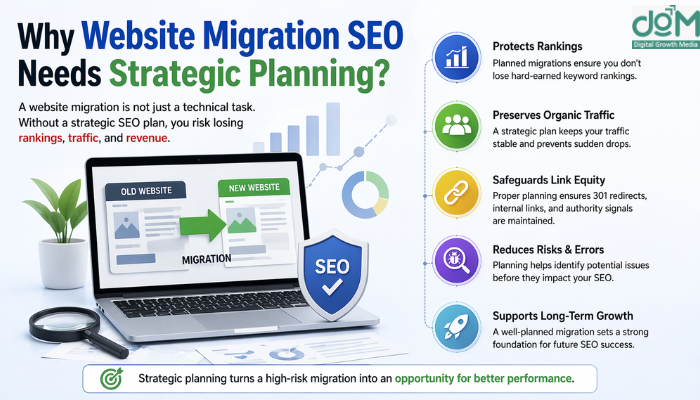
The team treated their entire project as an SEO campaign instead of a development project. The project was not executed as a development assignment.
Improper website SEO migration strategy results in significant website traffic losses which lead to decreased revenue according to research findings.
- The primary planning activities focus on these elements.
- The migration goals and scope need to be defined.
- The current state of SEO performance requires assessment through an audit.
- The process requires identification of all essential pages.
- The distribution of responsibilities needs to be established between different teams.
The detailed roadmap guaranteed that all search engine optimization elements would be included in the project. The team completed website migration search engine optimization work before making design and development choices.
Pre-Migration SEO Checklist That Saved Traffic
The team performed a complete analysis of the upcoming website before its launch.
Technical audit
- Crawl complete website system
- Export all website links together with their associated metadata
- Identify all broken links and duplicate content
- Analyze backlinks and authority pages
SEO performance evaluation
- Monitor keyword developments
- Calculate website organic traffic
- Record the most successful website pages
URL mapping strategy
- Develop complete 1:1 redirect mapping
- Redirect chains need to be avoided
- Link equity needs to be maintained.
Redirect mapping stands in Website Migration SEO as the most significant component which determines the success of website migration search engine optimization.
Execution Phase: Where Most Websites Fail
The Execution Phase shows in domain migration SEO the point where most websites experience failure. The execution phase of a project determines the success of that project because websites lose visitors during this phase when they make certain mistakes.
What we implemented:
- 301 redirects for all old URLs
- Updated canonical tags
- Internal linking system received optimization
- URL structure system maintained consistent operation
Technical SEO elements:
- Mobile responsiveness system underwent testing
- Page speed system received performance enhancements
- Structured data content remained intact
- XML sitemap system received updates
The SEO team and development team established cooperation methods to prevent performance gaps between their work.
In Website Migration SEO was executed with zero compromise on technical factors.
Launch Day Strategy That Prevented Traffic Drop
The launch day required careful management because traffic loss would reach its highest point during this period.
Controlled rollout approach
- Launch during low-traffic hours
- Monitor server response
- Check redirect accuracy
Immediate checks
- Crawl new website
- Fix broken links instantly
- Validate indexing status
A post-launch crawl helps detect issues before search engines react negatively.
Post-Migration SEO Monitoring and Recovery
In Website Migration SEO continues after the launch. The process needs to be monitored for two weeks.
Key tracking metrics track three specific areas which include
- Organic traffic trends
- Keyword ranking fluctuations
- Crawl errors and indexing
- Bounce rate and engagement
Actions taken
- Fixed missing redirects
- Updated internal links
- Improved content gaps
- Submitted updated sitemap
The post-migration audits enable early detection of ranking problems.
Common Website Migration SEO Mistakes
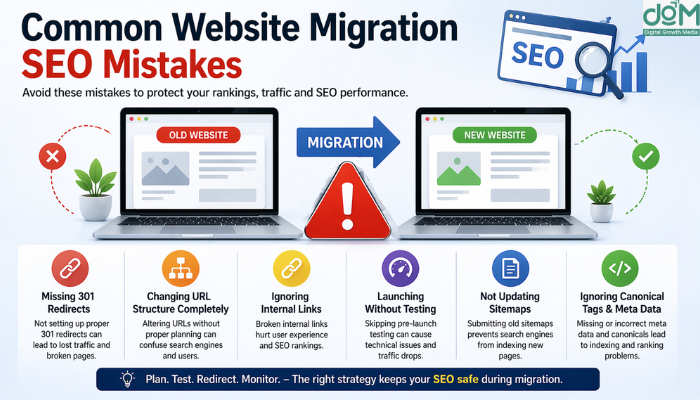
The many errors which businesses commit lead to their failure.
Mistakes to avoid
- Missing 301 redirects
- Changing URL structure completely
- Ignoring internal links
- Launching without testing
- Skipping SEO audit
A single error has the potential to cause major ranking decline. Website Migration SEO requires exact execution.
Results After Website Migration SEO Implementation
The migration at digitalgrowth.media delivered stable results.
The results showed that
- The traffic showed only minor variations
- The rankings returned to their original position
- The website achieved faster loading times
- The website provided a better experience to users
The proper execution of migrations can lead to enhanced SEO outcomes in certain situations.
Advanced Insights from Market Trends
Current SEO trends show that migration success depends on:
- Core Web Vitals optimization
- Mobile-first indexing
- Structured data consistency
- Content relevance
Experts emphasize planning, risk assessment, and execution alignment as key pillars.The evolving algorithms of search engines make website migration SEO more challenging.
Also Read : Local SEO Services: How to Rank Higher in Your City in 2026?
FAQs
1. What is Website Migration SEO?
Answer: The process of Website Migration SEO enables websites to maintain their search rankings during domain and design and platform changes.
2. Does migration always affect SEO?
Answer: Yes. Temporary fluctuations happen. Proper planning reduces long-term impact.
3. How long does SEO recovery take after migration?
Answer: Recovery may take a few weeks. Complex migrations may take months.
4. What is the most important factor in migration?
Answer: The process of 301 redirect mapping establishes the crucial element for migration because it maintains both link equity and search engine rankings.
5. Can traffic increase after migration?
Answer: Yes. Improved structure and speed can boost rankings. The changes will result in higher website traffic for the website.