


For years, people basically kept a score of SEO success using just one thing, like ranking higher on Google. If your page landed in the top three positions, you might see steady traffic and leads. But in 2026 that whole idea sort of breaks down, and it’s not really the same.
With Google AI Overviews now showing up, the way users deal with search results changed pretty hard. Instead of clicking around to multiple sites, users often get an AI-generated summary that answers the question right there, instantly. So instead of only “being on page one”, your brand now needs to get mentioned inside the AI-generated response itself.
New industry studies suggest Google AI Overviews appear on almost half of all Google searches. That should make things easier for users, yet it messes with the old organic traffic flow. Websites can still rank well but if they are not referenced in those AI-generated summaries, clicks drop, even if their rankings don’t move much.
So yeah, the latest SEO reality isn’t only about rankings anymore. It’s more about visibility, authority, and trust.
How Google AI Overviews Are Reshaping Search?
Traditional Google search showed that a stack of blue links, like each ranking page got its own chance to pull in clicks. But nowadays Google AI Overviews usually grabs the most visible real estate in the search results, and it hands users a short answer, before they even bother to look at the organic listings.
So a lot of searches end right there, because people already got what they needed from Google’s AI generated summary, no actual website visit required.
This has created two very different outcomes for brands:
- Brands that get included in Google AI Overviews often see a lot more visibility plus engagement.
- Brands that only sit on page one—yet they’re not cited—start watching click-through rates slide, sometimes pretty fast.
Basically, visibility and rankings don’t behave like the same thing anymore.
Also Read : How Digital Marketing Can Help Clinics And Hospitals to Get More Patients in 2026?
Why Rankings No Longer Guarantee Traffic?
Many businesses have noticed an unusual trend over the past year.
Their keyword rankings remain stable or even improve slightly, yet overall organic traffic continues to decline.
The reason is straightforward.
When Google AI Overviews appear for a search query, users often read the AI-generated summary instead of clicking on the organic search results. Even if your website ranks first, it may receive fewer visitors because Google has already answered the user’s question.
Industry research indicates that pages not referenced within AI Overviews can experience dramatic reductions in organic click-through rates, despite maintaining their rankings.
This is why relying solely on traditional SEO reports can be misleading. Ranking reports may look healthy while traffic quietly declines.
Why Some Brands Gain More Traffic Than Others?
The biggest difference isn’t who ranks first.
It’s who gets cited inside Google AI Overviews.
When Google selects content to generate its AI summaries, it looks for trustworthy, well-structured, and authoritative information. Brands chosen as sources receive far greater exposure than competitors that simply rank in the search results.
Several SEO studies have shown that websites featured within Google AI Overviews enjoy substantially higher organic engagement compared to websites that only appear in standard listings.
The takeaway is simple:
Google is rewarding authority, not just optimization.
Also Read : Why Your Website Traffic Dropped in Early 2026—And The Steps to Get It Back?
What Google Looks For Before Citing Your Content?
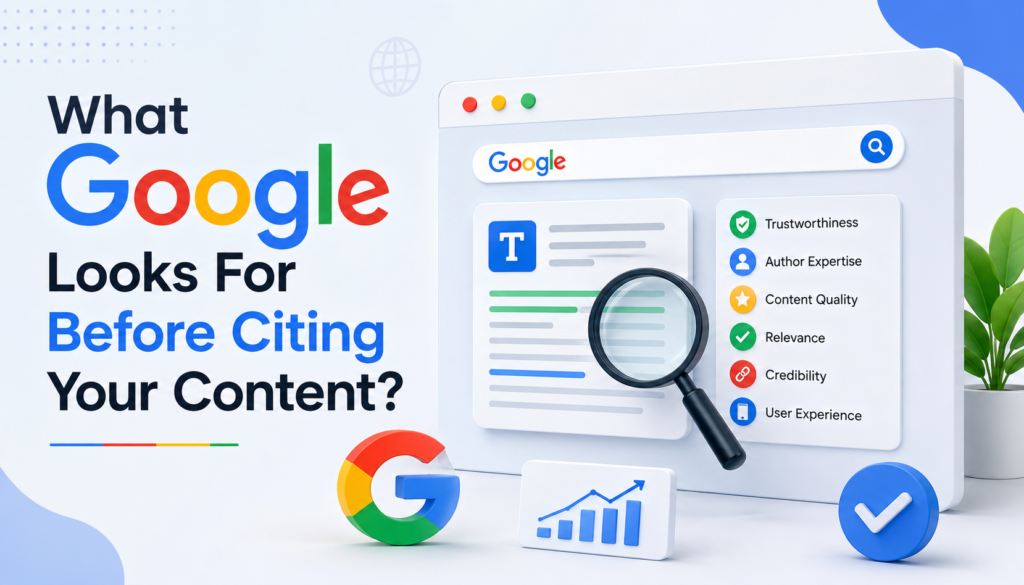
A lot of marketers sorta assume that if their rankings go up, then AI-generated summaries will basically show their content more often. It’s kinda like a direct line, but not really.
See, higher rankings do help—but only up to a point. Google AI Overviews tend to lean toward content that feels genuinely trustworthy and shows actual expertise, not just something that ranks.
Usually the pages with the best “citation potential” also tend to have things like…
- Direct answers early, like near the top of the page
- Headings that are clear, along with structured formatting
- Statistics that are accurate and backed by credible sources
- Original perspectives, plus real world know-how from experience
- Information that gets refreshed on a regular basis
- Language that’s easy to parse and understand
In other words, Google’s AI prefers text it can interpret quickly and then confidently turn into something useful for users.
Long intros , too many keywords used in a forced way, and explanations that stay kinda vague can make it harder for the AI systems to spot the real answer they need.
The Growing Importance of E-E-A-T
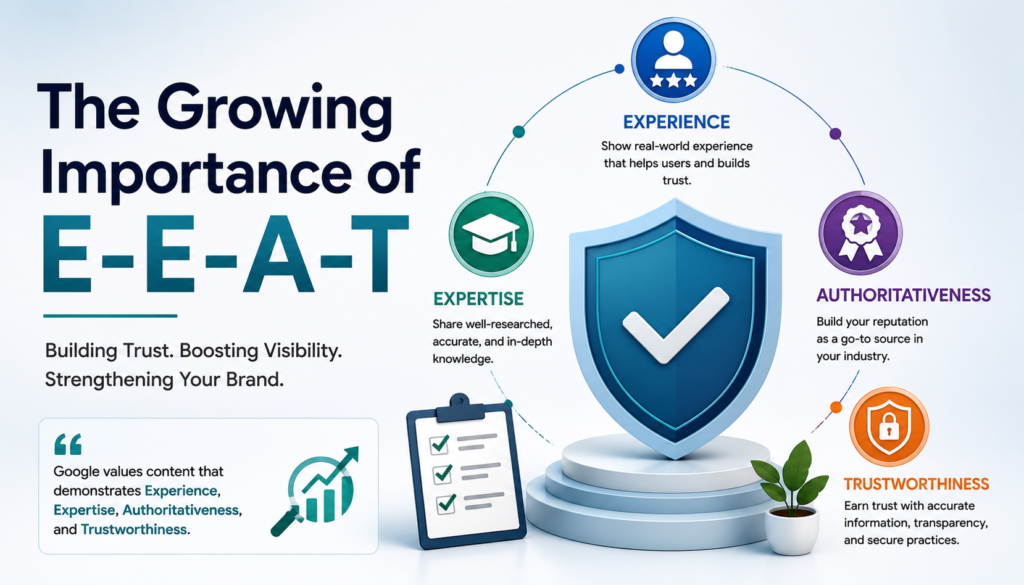
Google’s E-E-A-T framework—Experience, Expertise, Authoritativeness, and Trustworthiness—has become even more important lately, especially with Google AI Overviews doing the heavy lifting.
So it’s not just about checking keywords, like some sort of simple algorithm. Instead Google’s AI basically looks at whether your content feels solid enough, to get pulled into its generated answers.
If a brand can show real, hands on industry experience, it often has a noticeable edge.
There are a few practical ways to strengthen E-E-A-T though, like publishing content written by recognized experts, adding short author biographies, and citing reputable research. Also, you can drop in original case studies and share first hand experiences, those are typically treated as extra signals. Don’t forget, older articles should be refreshed regularly too.
All of that tends to raise Google’s confidence in what you publish, and that can make it more likely your pages are cited.
How to Optimize For Google AI Overviews?
SEO in 2026 is no longer about chasing rankings alone.
Instead, businesses should optimize their content specifically for Google AI Overviews.
Some effective strategies include:
Answer Questions Immediately
Provide a clear answer within the first few paragraphs before expanding on the topic.
Use Structured Content
Break articles into logical sections using descriptive headings, bullet points, and numbered lists.
Support Every Important Claim
Back your content with research, statistics, and credible references wherever possible.
Demonstrate Real Experience
Share practical examples, original insights, and lessons learned instead of repeating commonly available information.
Keep Content Fresh
Google increasingly favors updated content. Refresh important pages regularly with new information, statistics, and examples.
Focus on User Intent
Understand what users actually want to know and answer their questions completely rather than writing solely for search engines.
The Relationship Between Organic and Paid Search
A kind of interesting trend is showing up right along with Google AI Overviews, and it seems Brands that show up inside the AI generated summaries tend to get a noticeable bump in their paid advertising performance too.
It works in a pretty simple way, when a user first catches a brand name inside Google’s response, later that same brand is shown again in a sponsored listing. At that point, trust is already sort of there, even if the user doesn’t think about it too hard.
The ad then feels more credible, since the person has already seen Google talk about that brand like it’s a dependable source, like an authority. And so, it ends up that organic credibility is now reinforcing the paid results, which together creates a more solid overall search presence.
The Future of SEO Is Citation-Based Visibility
Traditional SEO is mostly about chasing better rankings, just, basically.
Modern SEO is less about that and more about being a trusted source of information, really.
The brands that will win in the next few years might not be the ones with the most keywords or the most backlinks. It could be the ones producing precise, experience fueled content that Google is comfortable with, enough to bring it up in Google AI Overviews.
What matters now is answering questions clearly, showing your expertise, keeping the content updated regularly, and building real credibility across your niche.
Also Read : Google My Business Chat Feature Phasing Out: What Businesses Need to Know?
Conclusion
The arrival of Google AI Overviews feels like one of the biggest shifts in search since Google’s original ranking algorithm.
Being on page one is no longer the finish line, not really.
Today’s winners are the brands that end up inside Google’s AI generated answers, like they get pulled in right there.
If your SEO strategy still only chases rankings, then you’re kind of optimizing for yesterday’s search experience. In 2026 and beyond, businesses have to make content that is believable, well organized, technically grounded, and genuinely useful—not just to get it to rank but also to earn visibility exactly where users are paying the most attention.
The future of SEO goes to brands that serve both people and machines. Those who adjust early to Google AI Overviews will see better visibility, higher trust, and steadier organic growth as AI powered search keeps changing, again and again.