


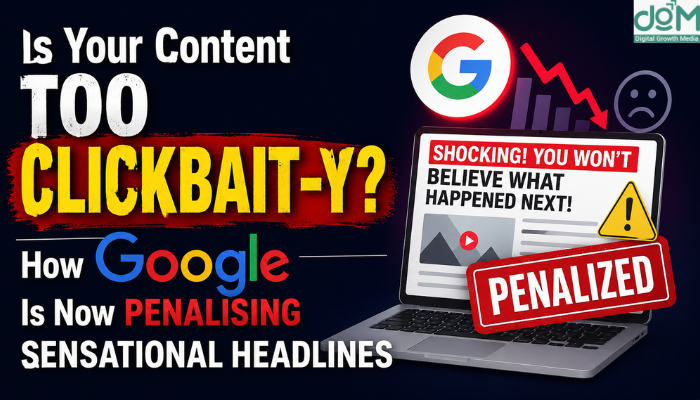
The landscape of digital content has experienced in avoid clickbait in content marketing a swift evolution in 2026. There is no longer any incentive for search engines to encourage curiosity gaps or outlandish promises. Clickbait has become a thing of the past in content marketing as organizations strive to adapt to algorithm changes. Users’ understanding of the importance of accuracy has increased, resulting in faster departures from sites with misleading content. In today’s world, the focus has shifted to satisfaction metrics rather than simple clicks.
What Is Clickbait in Modern Content Marketing
Clickbait is when the headline manipulates curiosity but hides important information. It’s all about getting those clicks to avoid clickbait in content marketing . The outcome isn’t always favorable for users.
Examples of clickbait:
- “You won’t believe what happened next”
- “This one trick can turn your life around”
- “These doctors hate this secret”
These techniques used to work before. Now, they generate bad SEO signals.
Google Tightens Control Over Sensational Headlines in 2026
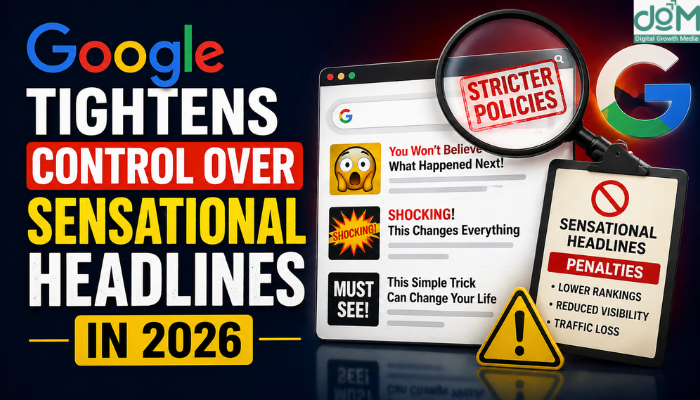
Google has clearly stated to avoid clickbait in content marketing position. The 2026 updates directly address issues like clickbait and sensationalism.
Important changes include:
- Explicit mention of clickbait in the guidelines
- Classification of sensationalism as a negative ranking signal
- Evaluation of headlines based on page value
Google will be checking whether your headlines deliver on their promises or not.
There’s another update which emphasizes on:
- Insights
- Depth
- Expertise
This type of content is rewarded on Discover and Search.
Why Clickbait Is Deteriorating Your SEO?
Clickbait produces quick traffic increases. But long-lasting harm comes after.
Bad SEO implications include:
- Bounce rate is high
- Dwell time is low
- Engagement signals are down
- Credibility of content is lacking
Such behaviors mean to search engines that content is bad, resulting in decreased rankings.
Google’s Helpful Content system also penalizes pages designed just for traffic generation, not users.
E-E-A-T in 2026 – Google’s Priority

Google takes E-E-A-T seriously:
- Experience
- Expertise
- Authority
- Trust
Clickbait doesn’t score well in terms of trust.
Content should:
- Meet promise from the headline
- Be accurate
- Reflect expertise on the topic
That’s the reason clickbait cannot be used by brands in their content marketing campaigns.
Clickbait Detection by Google Today
Advanced algorithms make use of modern signals.
Some techniques used in the detection process are:
- Content Headline Consistency
- Engagement Signals
- Artificial Intelligence Semantic Analysis
- User Behavior Monitoring
Google checks the credibility of avoid clickbait in content marketing claims against headline content. Discrepancies are detected immediately.
Sensational vs. Engaging Headlines: Key Differences
Headlines that entice readers are engaging. The sensationalist approach manipulates them.
Example of balanced headline:
- “5 Proven SEO Strategies that Boost Traffic by 40%”
- Clickbait headline:
- “SEO Hack that Will Blow Your Traffic Out of the Water Overnight”
The key is in transparency and authenticity.
How to Avoid Clickbait When Creating Content for Marketing?
Digital growth media and other brands opt for ethical content marketing strategies.
Tips for avoiding clickbait:
- Write descriptive and accurate headlines
- Content should deliver on its promise
- Base your claims on research data
- Align with users’ intentions
- Be honest and authentic
How to Structure Your Content to Avoid Clickbait
- Incorporate actual examples
- Provide expert insight
- Structure content well
- Inform users effectively
What High-Performing Content Looks Like Today
Content that wins in 2026 works under a different principle of non-clickbait headline writing.
Important features:
- Rich information content
- Headline alignment
- High engagement levels
- Genuine voice
- Backed up by data
Google rewards useful content no matter what its source is.
Future of Headlines: AI & Algorithms in Charge
Even Google uses AI for rewriting article headlines.
It implies the following:
- Your headline will not always show up
- Clickbait titles will be fixed or replaced
- Accuracy counts more than creativity
All the above emphasizes one principle: write to be accurate.
Why Companies Need to Start Taking Action Now?
Failure to act will have serious consequences.
Some of them include:
- Lost traffic
- No discover feed anymore
- Less trust from customers
- Less conversions
A company that steers away from clickbait in their content marketing will have:
- Consistent traffic
- Improved rankings
- Increased loyalty
Also Read : Google Reviews Deleted in December 2025: What’s Happening And Why?
FAQs
1. What is clickbait in content marketing?
Answer: Clickbait refers to headlines that lure users into clicking without offering any value at all.
2. Does Google penalise clickbait in content marketing?
Answer: Yes. Google specifically targets clickbait and sensationalism in their ranking algorithms.
3. How can I ensure I don’t use clickbait in my content marketing?
Answer: Always stick to accurate headlines, provide actual information in line with your headline promises, and pay attention to user intent.
4, Is clickbait equivalent to engaging content?
Answer: No. Engaging content gives you relevant information while clickbait manipulates users’ curiosity.
5. Why should clickbait content be avoided in SEO?
Answer: It causes increased bounce rate and low rankings.