
The future of search will be more visual. Those brands not implementing Image SEO Optimization miss out on high rankings, a decrease in speed of their websites, and low user engagement levels. The new Google AI-based search engine is assessing images on speed, structure, accessibility, and context of their use. Website owners who have failed to optimise their visuals are struggling with their ranking and indexing across Google Search, Google Images, and AI-based search summaries.
Search engines are showing significant changes in digital marketing trends. The number of visual searches is constantly rising along with Google’s AI preferences for websites featuring optimized visuals. Despite that, there are still many websites which use oversized pictures, poor alt texts, irrelevant image names, and low mobile compatibility.
As experts from Digital Growth Media note, image optimization has become a vital aspect in website marketing due to its influence on Core Web Vitals, AI-based search, and authority of website contents.
Statistics indicate that images are still one of the top reasons behind slow websites and poor user experience. Moreover, AI-based search results become more reliant on images.
Changes at Google Search
The search engines do not rely on analyzing the content alone anymore; search algorithms take a more holistic approach by considering the entire user experience, and the images contribute to it.
On the occasion of advanced Image SEO Optimization, a number of AI search experiences were introduced, which have made visual content an important part of search ranking algorithm changes in 2026. AI-assisted summaries and new interactive search interfaces are changing the way sites get clicks. Companies that use powerful image optimization services are seeing better ranking since Google will be able to detect the purpose of the page much quicker thanks to them.
Common problems with images that affect search rankings include:
- Large size of image files
- Lack of alt-text
- Poor mobile optimization
- Generic file names
- Hero banners not loading
- Structured data missing
- Compressed PNGs and JPEGs
- Missing images in sitemaps
Slow Images Are Deteriorating Core Web Vitals
Images have direct impacts on page load times. Larger files cause delays in page load times and negatively impact core web vitals like LCP, CLS, and INP. Researchers found that images were always the biggest piece of content on a website. This makes it essential to optimize them for both desktop and mobile platforms.
Many companies pay attention only to textual SEO optimization. This is old-fashioned thinking because in 2026, AI-powered Image SEO optimization has a significant impact on technical SEO.
According to Digital Growth Media, you should try compressing all images prior to uploading them online. Websites that use WebP and AVIF formats outperform others because of their small file sizes.
The best image speed optimization strategies are:
- Using next-gen image formats
- Compressing files prior to uploads
- Not using oversized hero banners
- Lazy loading for elements below fold
- Setting width and height attributes
- Image optimization for mobiles
- Not using unnecessary animations
Weak Alt Text Impacts AI Understanding
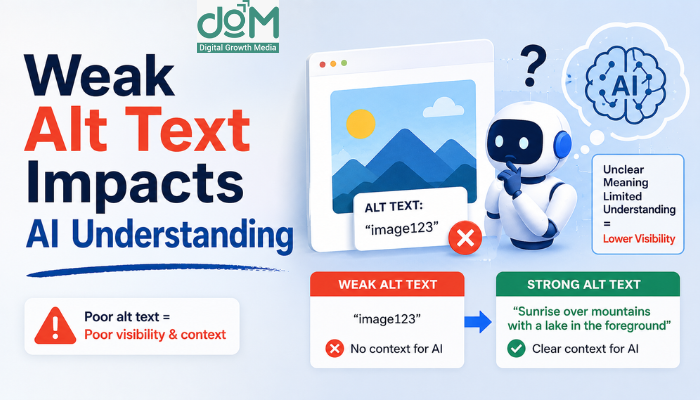
AI systems at Google need visual signal interpretation. This is why alt text becomes relevant for understanding images.
However, many websites still resort to using keywords in alt tags. This approach is bad for optimization purposes. According to research, effective alt text makes image search more efficient. Good Image SEO Optimization means natural description that will help to convey image intent.
Weak alt text examples:
- image1
- seo-photo
- Banner-final
Improved alt text examples:
- Digital marketer checking Google image search trends
- Mobile-friendly website image optimization
- SEO professional improving core web vitals
Our digital marketing agency values semantic relevance since AI search systems interpret the context of the content rather than mere keywords.
Generic File Names Lower Rankings
When search engines see image filenames, they index the images. Generic filenames lower the relevancy signals.
If an image is saved with “IMG00234.jpg,” it contains no contextual clues for Google. Filing visual content with optimized filenames helps Google better understand visual content. Companies planning to invest in Image SEO Optimization must rename their files before uploading.
Examples of optimal file naming strategies:
- Use relevant keywords
- Use hyphens to separate words
- Keep the filename short
- Match the filename with the page intent
- Do not use arbitrary numbers and symbols
This technique increases indexing accuracy throughout Google Images.
AI Search Benefits From Better Visual Context
AI-driven search results decrease traditional click-throughs. As search engines provide summarized information within the result page itself, websites require more authority signals.
Images optimized for search improve contextual signals of websites for AI-driven search engines. Digital Growth Media specializes in structured content, optimized visuals, and semantic consistency because AI systems consider quality differently than traditional search.
Some visual SEO signals include:
- Image relevancy
- Page context
- Accessibility
- Load performance
- Visual appeal
- Metadata structuring
- Mobile usability
Visuals with high optimization produce more trust signals.
The Mobile Image User Experience Becomes Crucial
Currently, most searches are performed on smartphones. Big images lead to visual reflows and bad user interactions.
Google is very strict about mobile usability because negative user experience results in high bounce rates. Specialists consider that mobile image performance will be crucial for ranking positions after algorithm updates. Brands that use modern Image SEO Optimization have eliminated barriers for mobile users.
Mobile image optimization suggestions include:
- Responsive dimensions for images
- Do not use fullscreen popups for images
- Compression of mobile hero blocks
- Regular testing of images
- Fast loading of thumbnails
According to Digital Growth Media, mobile testing is crucial since demands of smartphone users do not stop growing.
The Need For Smarter Image SEO From Businesses
Visual optimization is essential. The Google AI system relies on quick access to structured content. Images have an impact on how users engage, crawls, and interpretations.
Businesses continue concentrating on writing SEO but neglecting visuals SEO. This approach hinders future SEO potential for the website.
A winning Image SEO Optimization strategy includes:
- SEO technical optimization
- AI optimized images
- Good accessibility standards
- Mobile-first design considerations
- Quick loading images
- Content relevancy
At Digital Growth Media, we help our clients optimize their websites to work seamlessly for AI-driven search engines.
FAQs
1. Why is image SEO essential in 2026?
Answer: SEO image optimization helps speed up web pages, increase AI visibility, boost accessibility, and improve Google indexing.
2. Is there a relationship between image size and Google ranking?
Answer: Big images hurt the speed of your website and Core Web Vitals score.
3. Which image type should be used for SEO purposes?
Answer: WebP and AVIF formats offer better compression rates and quick loading times.
4. Why is alt text useful for SEO?
Answer: Alt text lets Google know what an image is all about.
5. Are images beneficial for AI-powered searches?
Answer: Visual content helps Google better understand context and produce more accurate results.